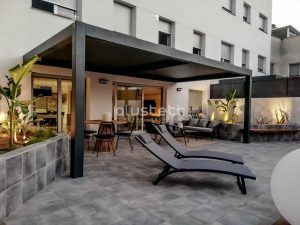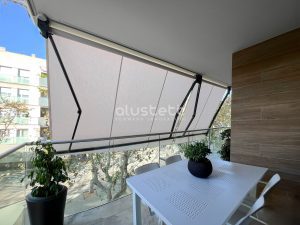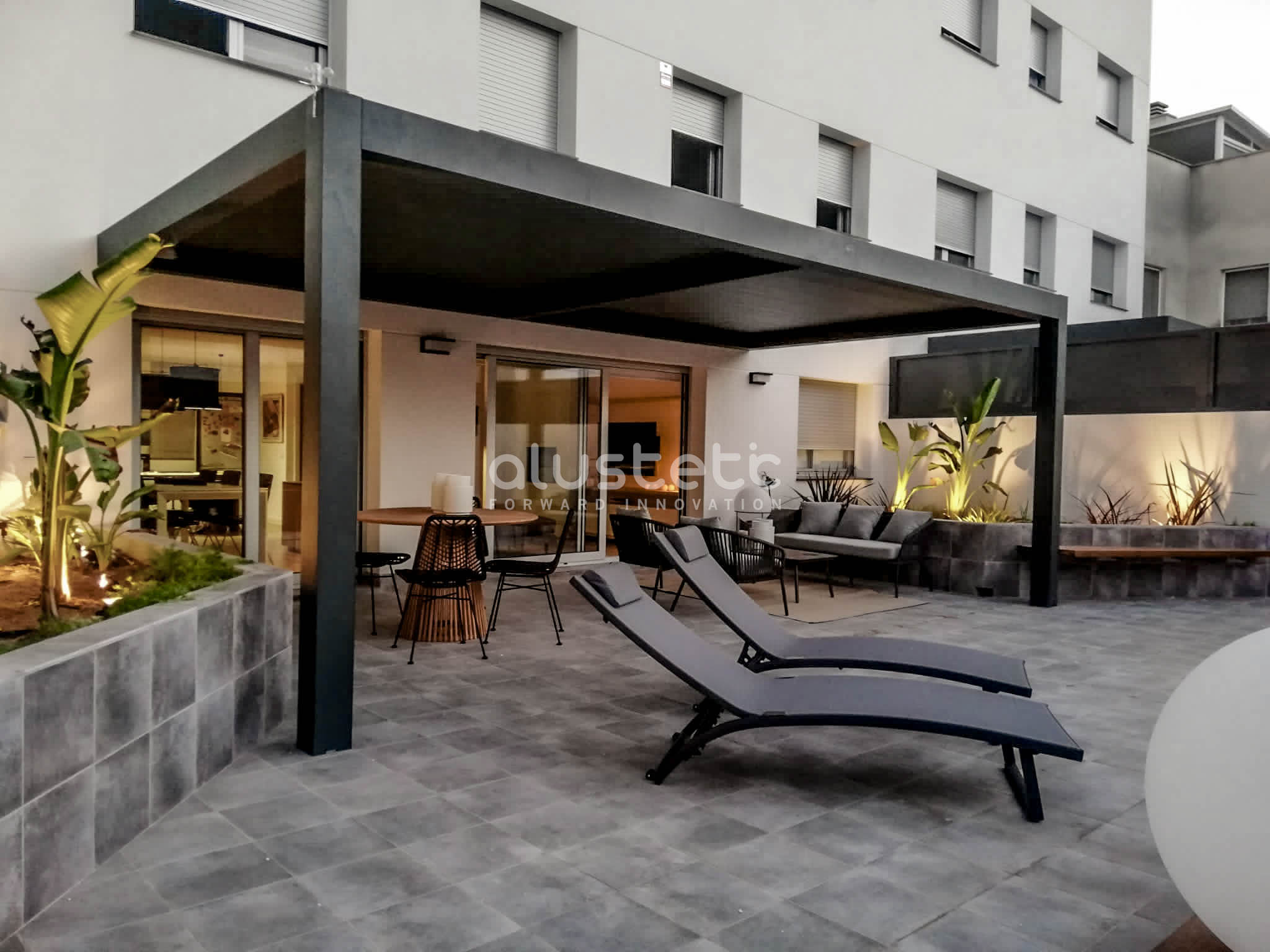
Choosing a bioclimatic pergola isn't just about aesthetics. On paper, they all look pretty much the same, but when you really start comparing them, the important differences emerge: orientation, dimensions, type of louvers, structure, enclosure options, and everyday comfort.
The right choice isn't necessarily the most eye-catching in a photo. It's the one that truly fits your terrace, your lifestyle, and the level of protection you expect year-round.
In this guide, we'll tell you what aspects to consider before making your decision, so your investment makes sense today… and in a few years to come.
Before looking at models: the first question you should ask yourself
Before considering finishes, colors, or accessories, there's a more important question: what do you expect from your pergola?
It's not the same to want a shaded area for summer meals as it is to seek a more sheltered outdoor space to use for many more months of the year. Nor is it the same to cover a small terrace next to your house as it is to design a large structure with lighting, screens, or enclosures.
Having a clear idea of how you want to use that space is the first step to getting it right.
The orientation of the terrace matters more than it seems
The orientation completely changes the behavior of a bioclimatic pergola. A south-facing terrace doesn't receive the same amount of sunlight as one facing east or west.
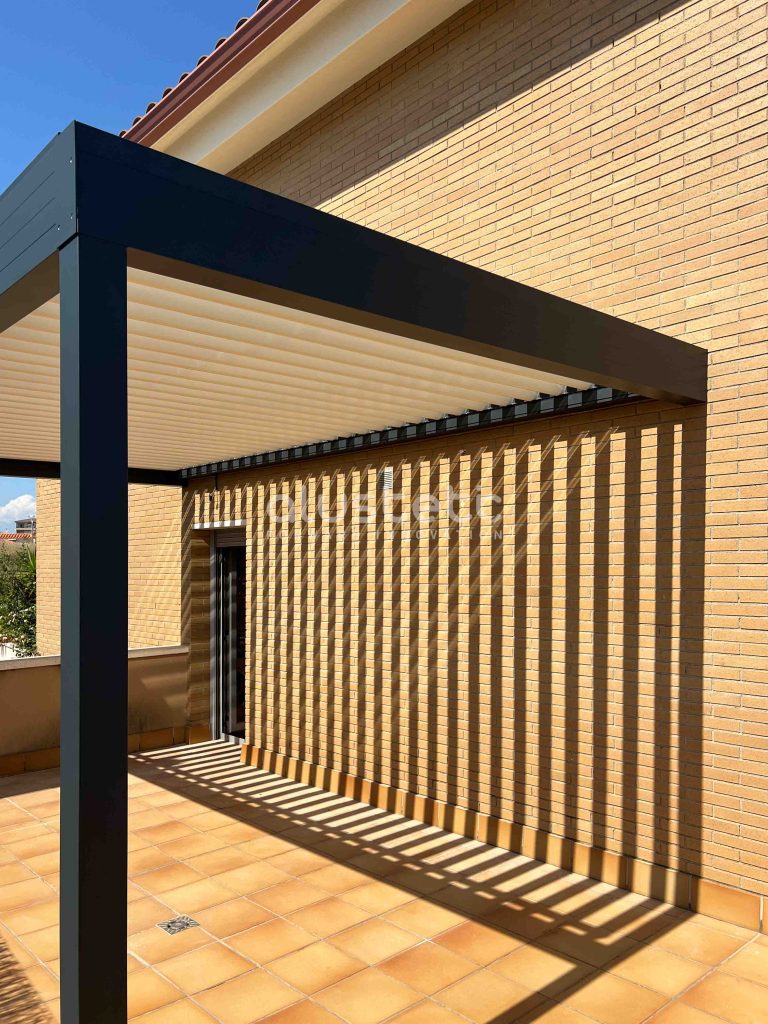
For example, on certain east- or west-facing terraces, it might be preferable to install louvers perpendicular to the facade, as this makes better use of the first rays of morning sun while also improving protection from the summer heat.
Therefore, before choosing, it's advisable to carefully consider three things: when the sun shines most intensely, the typical wind direction, and whether you need more shade, more ventilation, or a balance between the two.
Not all pergolas are suitable for the same dimensions
This is often where the mistake begins: choosing based on a photo first and asking about measurements later.
To give a real and useful example, in this article we'll use Mitjavila's bioclimatic pergolas as a reference, as these are the ones we currently recommend and install in these types of projects.
Because a pergola designed for a smaller, more intimate terrace is not the same as one designed for larger spaces, with a more prominent presence and greater outfitting possibilities.
Therefore, beyond aesthetics or price, the important thing is to choose a pergola that truly fits your space and the way you want to enjoy it.
A well-chosen pergola not only complements the house, but also enhances the enjoyment of the outdoors.
Protection from water and wind: a key aspect when choosing
When you choose a bioclimatic pergola, you're not just choosing design. You're also choosing the peace of mind that comes from knowing your space will remain comfortable even when the weather changes.
That's why it's important to pay attention to how it's constructed. Details like the way the louvers close, the rubber seals that help to improve the watertightness, and the perimeter gasket make a real difference, because they help to better protect the space and reduce the risk of leaks when the pergola is closed.
Furthermore, the rainwater collected by the pergola itself is channeled and, generally, drained through two of the structure's struts. This is crucial for the entire system to function properly and for you to continue enjoying the outdoors more comfortably.
In Mitjavila's bioclimatic pergolas, this aspect is very well implemented, and it's one of the reasons we recommend them.
Because a beautiful pergola is appreciated at first sight. A well-designed pergola is appreciated every day.
Think from the beginning about whether you will want side enclosures
This point is often left until the end, but it can completely change how you enjoy a pergola.
If you think you'll want more privacy, more shelter from the wind, or a more usable outdoor space for more months of the year, it's worth considering from the start.
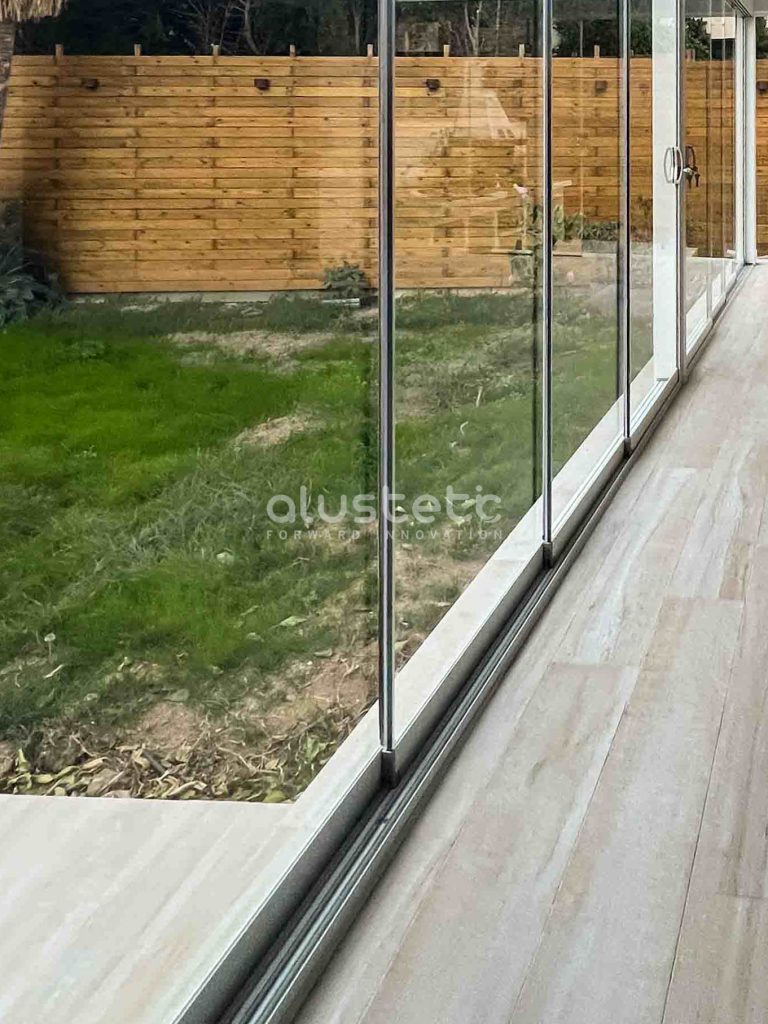
The Mitjavila Horizon III bioclimatic pergola, for example, allows you to incorporate side enclosures such as sliding glass doors, vertical screens, mosquito nets, or latticework. This opens up many possibilities for creating a more protected, comfortable, and much more versatile space.
Because, ultimately, it's not just about covering a terrace. It's about shaping an outdoor space that suits you and the way you like to live in your home.
Automation, lighting and daily comfort
Not everything that makes a pergola stand out is immediately apparent. Sometimes, it's precisely those seemingly small details that make the space so much more enjoyable.
The Horizon III bioclimatic pergola by Mitjavila allows for the integration of features such as perimeter LED lighting, infrared heating, and a wind sensor, all designed to provide greater comfort and peace of mind for everyday use.
Because ultimately, it's not just about having shade. It's about creating an outdoor space where you want to be, linger, and enjoy yourself, almost without a care in the world.
In a bioclimatic pergola, the details matter far more than they seem: orientation, dimensions, protection from water and wind, enclosures, and everyday comfort. Choosing well isn't about picking the one that looks best in a picture, but about finding the one that truly fits your space and the way you want to enjoy it. Because when a pergola is well-designed, it doesn't just enhance the exterior; it makes it much more enjoyable.