How to Understand a Window Quote Before Making a Decision (written in catalan)

How to Understand a Window Quote Before Making a Decision (written in catalan)

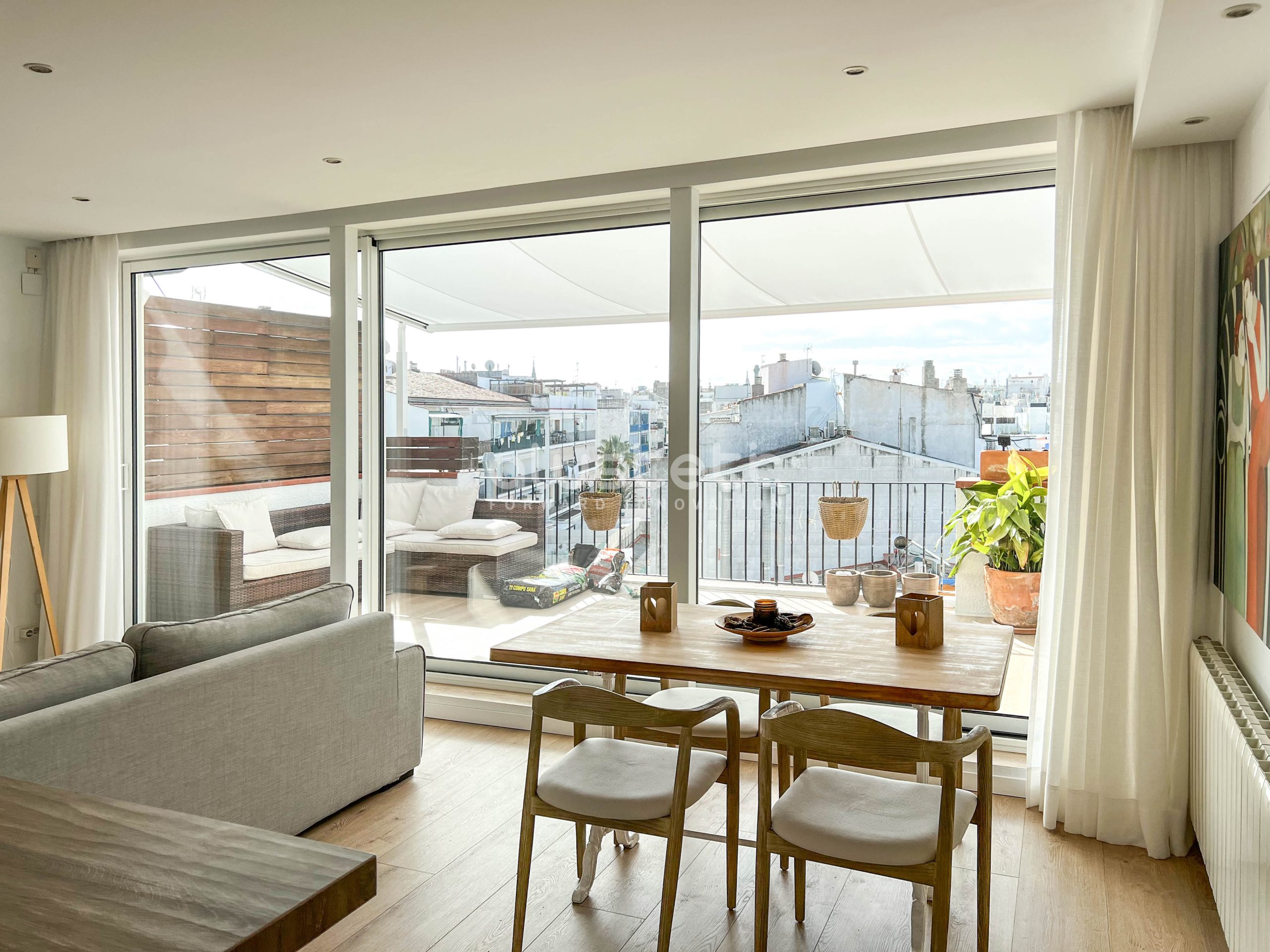
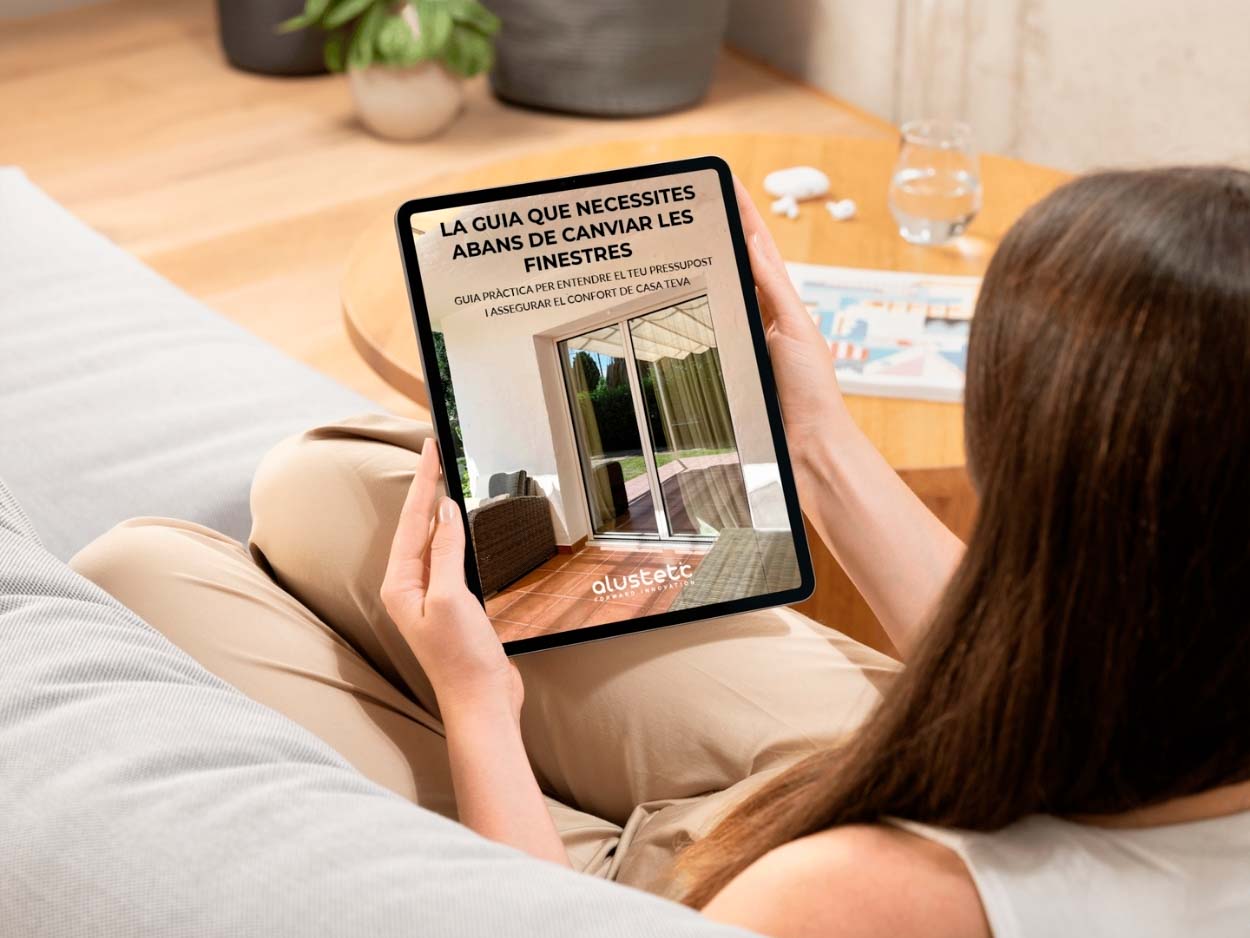
Replacing the windows in your home is not something you do every day. It is an important investment, and when the time comes, it is normal to find yourself comparing several quotes, facing technical terms and asking one very clear question: How do I know if this quote has been properly prepared? The truth is that a window cannot be evaluated by looking only at the final price. Behind a good window there are several elements that should be clearly defined: the frame system, the type of opening, the glass, the shutter if there is one, the installation, the finishing details and the guarantees. That is why we have created “The guide you need before replacing your windows”, a free resource designed to help you understand better what you are buying before making a decision. I want the free guide (in Catalan) The price does not explain everything When comparing window quotes, it is easy to focus only on the final amount. But doing so can lead to the wrong conclusions. Two quotes may look very different in price, but they may not actually include the same things. The frame system, the glass, the shutter, the opening system, the finishes or even the way the installation will be carried out can all vary. It is like comparing two cars only by their price, without looking at the engine, equipment, safety features or fuel consumption. With windows, something similar happens: you need to look at the whole package. What a good window quote should include A clear quote should help you understand what is being proposed. You do not need to be a technical expert or know every detail of the industry, but you should be able to identify the most important points. 1. The type of window and opening system A sliding window is not the same as a casement, tilt-and-turn or balcony door system. Each option has its advantages depending on the space, how it will be used and the level of insulation you are looking for. A good quote should clearly state which type of opening is being proposed and why it suits each area of the home. 2. The frame system The frame system is the structure of the window. It may be aluminium, PVC or another system, and it has a direct impact on insulation, durability, maintenance and aesthetics. It is not enough to know the material. It is also important to understand which system is being used, whether it includes thermal break technology, what performance it offers and whether it meets the needs of your home. 3. The glass The glass is one of the most important parts of the window. It can help improve thermal insulation, reduce outside noise, control solar heat gain or increase security. That is why a quote should not simply say “double glazing”. It should be more specific: glass composition, air gap, treatments and main performance features. 4. The shutter and shutter box Sometimes the quote includes a shutter, and sometimes it does not. This is worth checking carefully, because a poorly defined shutter can affect the final result. It is also important to know what the shutter box is like, whether it is insulated and how it is integrated with the window. A good window can lose performance if the whole system has not been properly considered. 5. The installation Installation is key. You can have a very good window, but if it is not installed correctly, the final result may not be what you expected. This is where finishing details, sealing, adjustment and the way the window connects with the existing wall opening come into play. These are details that are often not visible at first glance, but they make a real difference over time. 6. The guarantees Another important point is knowing what the guarantee covers and for how long. Not only the product guarantee, but also the installation guarantee. A well-explained quote should give you confidence before confirming the work. Why we created this guide Because many people come to us with very similar questions: “What type of glass do I need?”“Why is this quote more expensive than the other one?”“What does thermal break mean?”“Is the shutter included?”“How do I know if a window will insulate properly against cold, heat or noise?” And it is completely normal. Replacing windows is an important investment, and nobody wants to make the wrong choice. The guide is not designed to fill your head with technical jargon, but to help you understand the key points in a clear, practical and easy-to-apply way when reviewing your quote. I want the free guide (in Catalan) Download the free guide If you are thinking about replacing your windows or you already have a quote in your hands, this guide can help you review it with more confidence. Download “The guide you need before replacing your windows” for free and learn how to check the most important points before making a decision. Ebook finestres2 Amb l’enviament d’aquest formulari, accepto subscriure’m a la newsletter d’Alustetic, així com la política de privadesa. Descarrega-la ja gratis! You will receive the guide by email. No complicated technical jargon, no pressure, just clear explanations designed to help you understand your quote better.

How to soundproof your house with windows

How to soundproof your house with windows

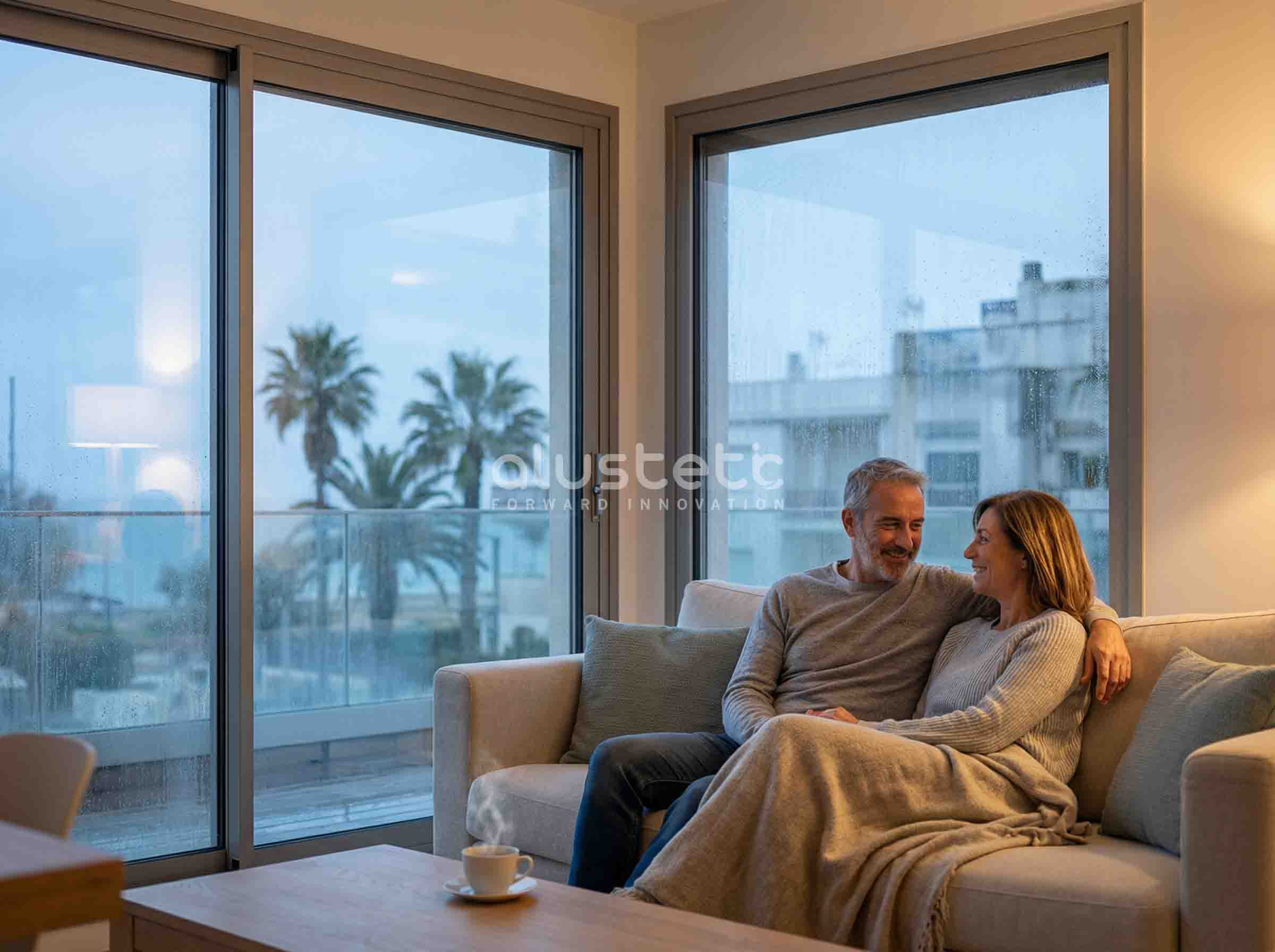
There are homes where noise seeps in without asking permission: traffic, motorcycles, terraces, neighbors, blinds, conversations in the street or that delivery truck that seems to have a grudge against you. When this happens, many people think directly about “installing double glazing”. But the reality is that, to truly reduce noise, the window must be well planned as a whole. The profile, the seal, the airtightness, the installation and the composition of the glass are key to improving the acoustic comfort of a home. The good news is that, when chosen correctly, a window can make a very important difference in your daily life. And although the final result always depends on several factors, a good solution can help you gain a lot of peace of mind inside your home. Why windows are so important for reducing noise In a home, windows are often one of the most sensitive points when it comes to outside noise. If they’re old, don’t close properly, or have a weak seal, they let in more sound than they should. That’s why replacing windows can significantly improve home comfort. In many cases, it’s one of the most noticeable decisions when the goal is to sleep better, work more peacefully, or simply live with less background noise. The profile and seal: the foundation of a window that insulates well When talking about acoustic insulation, many people think only about glass. But the profile also plays a very important role. A window with a good closing system, good seals and a well-designed structure helps make it difficult for sound to enter. Put simply: if the window doesn’t seal well, the insulation loses effectiveness. That’s why, to soundproof well, it’s not enough to choose a specific glass. The quality of the profile and the seal also matter, and matter a lot. Installation: as important as the window itself Here is one of the key differences. A well-installed window will not perform as it should. If there are small leaks, poor seals or poorly resolved connections, sound will find a way in. That’s why, when looking to improve acoustic insulation, it’s not just about which window is installed, but also how it’s installed. Careful placement and good sealing are essential for the solution to really work. What is acoustic glass and why you notice the difference Acoustic glass is a glazing system designed to better reduce sound transmission. It is achieved by combining laminated acoustic glass, different thicknesses and an appropriate chamber. There is no single acoustic glass. For example, a composition like 4+4.2 / chamber 12 / 4+4.2 already offers interesting acoustic performance, but depending on the level of external noise, higher compositions can be studied. That’s why, when choosing an acoustic glass, it’s not just about asking for double glazing, but about defining a suitable composition for each home. What does it really mean to reduce sound by 40 dB It depends on the window, the glass and the installation, but there is a very simple way to understand it: the important thing is not just a number, but how the sensation changes inside the home. For example: • a normal conversation is around 60 dB• a quiet room at night is around 30 dB• the hum of a refrigerator is around 45 dB• a street with heavy traffic can be around 80 or 85 dB An acoustic glass is designed to better reduce the entry of external noise than conventional glass. And that, in the home, translates into something very clear: less background noise, more calm and a feeling of greater comfort. What really means reducing 40 dB When talking about decibels, the important thing is to translate it to a real situation. If your home has noise similar to a normal conversation, a good acoustic window can make the sensation drop significantly, moving closer to a calm and designed for resting environment. And if you live on a street with traffic, the change can also be very important: it doesn’t mean you stop hearing absolutely everything, but rather stop feeling that noise with the same intensity. That’s where the real difference lies. An improvement you notice every day When a window is well chosen and well installed, the change is noticed. You notice it when resting, sleeping, working and in that sense of calm that makes a home be enjoyed much more. Because soundproofing doesn’t consist of only putting a different glass, but of choosing a solution that really helps you gain comfort day after day. At Alustetic we help you assess what type of window can best fit your home, the environment and the result you are looking for. If you want to reduce noise in your home and gain wellbeing, we can advise you and prepare a customized proposal for you.

Types of Window Glass: Essential Guide

Types of Window Glass: Essential Guide

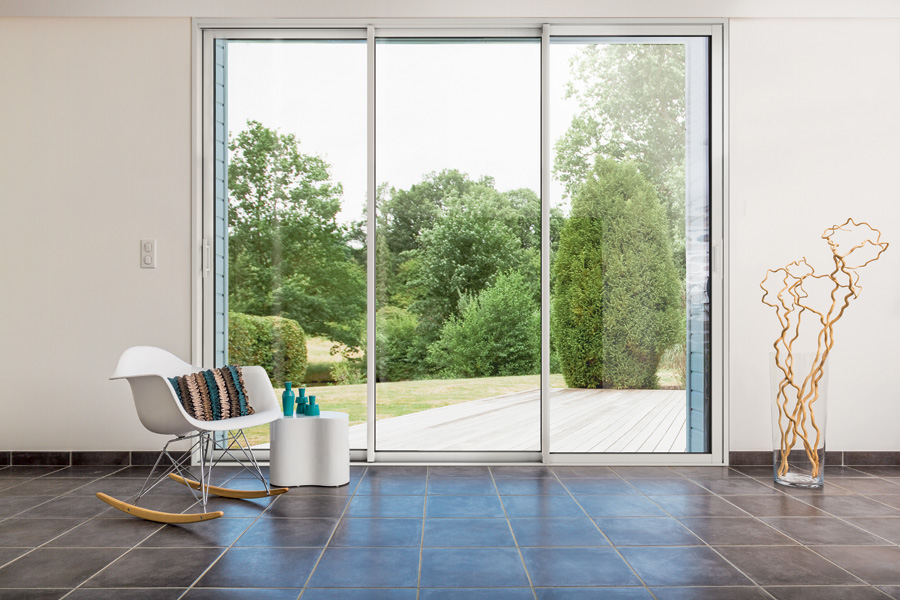
Choosing windows is not just about aluminium or PVC.The glass is the most important part of the assembly because it usually occupies most of the window’s surface: in modern windows, it is common for the glazing to represent approx.between 70% and 85% of the area, and in some designs with finer profiles it can be even more.That’s why, if you get the glass right, you notice it every day: more stable temperature, less noise, more security and less condensation. Camera glass: the foundation for insulation (double glazing) When we talk about camera glass (also called double glazing), we refer to two glasses separated by a sealed chamber (air or gas). This is the “base” configuration to start getting good insulation. Common confusion: “Climalit” is not a type of glass, it’s a popular way of calling it.It is very common to use “Climalit” as if it were a specific glass, when in practice it is usually used as a synonym for double glazing / camera glass. Said simply: • Camera glass = the format (two glasses + one chamber)• And within that format you choose what glasses you mount: low emissive, solar control, acoustic, safety laminate, etc. Key idea: “Climalit” is fine as a starting point, but to get it really right you need to define what you need (thermal comfort, solar control, silence, security…). GLASS SPACER (SEPARATOR): THE SMALL DETAIL THAT MAKES A BIG DIFFERENCE Between the two glasses of double glazing there is a separator (also called intercalaryor spacer), which maintains the distance and seals the chamber. This detail is more important than it might seem. • Traditionally, the usual was a aluminium separator (metal).• Today, in higher-performance windows, the “warm edge” (warm edge) is increasingly used: hybrid/synthetic separators with lower thermal conductivity. What do you gain with a warm edge? • Less “cold edge” around the perimeter of the glass.• Less risk of condensation around the frame.• Better overall thermal performance. Put simply: the warm edge helps prevent the glass from “cooling” so much at the edges, and that translates to more comfort and less humidity at the edge, especially in winter. Traditionally, the usual was an aluminium separator (metal). Today, in higher-performance windows, the “warm edge” (warm edge) is increasingly used: hybrid/synthetic separators with lower thermal conductivity. What do you gain with a warm edge? Less “cold edge” around the perimeter of the glass. Less risk of condensation around the frame. Better overall thermal performance. In practical terms: the warm edge helps prevent the glass from “cooling” so much at the edges, which translates into more comfort and less humidity at the edge, especially in winter. LOW-EMISSIVITY GLASS: THE MOST PROFITABLE INVESTMENT IN COMFORT Low-emissivity is an almost invisible treatment that helps retain interior heat in winter and improves efficiency. When the investment is worth it: • If you are looking for comfort and savings without complications.• If you are bothered by the “cold” that you feel near the glass in winter.• If you want the temperature to be more uniform throughout the room. It is an improvement that you cannot see, but you notice it right away: you will feel like being near the window without feeling that typical “coolness”. If you are looking for comfort and savings without complications. If you are bothered by the “cold” that you feel near the glass in winter. If you want the temperature to be more uniform throughout the room. It is an improvement that you cannot see, but you notice it right away: you will feel like being near the window without feeling that typical “coolness”. SOLAR CONTROL GLASS: TO AVOID “A ROOM WITH A VIEW OF AN OVEN” Solar control glass reduces the solar energy that enters. It is especially useful in orientations with a lot of sun (south/west) or large windows. When the investment is worth it: • If in summer the living room overheats even though you ventilate.• If you have direct sun for many hours.• If you want to depend less on air conditioning. Can a greenish hue be seen? Yes, sometimes. In some solar control glasses, depending on the light and angle, a slightly greenish tint can be appreciated (for example, in Guardian Sun type configurations). Two important ideas: 1. In everyday life it is normally not something that “stands out”. To really notice it, many times you have to look quite hard or compare it side by side with a completely neutral glass. 2. If for you it is very important to avoid any tonality, you can request an extra clear camera glass, like Guardian ExtraClear, which is designed for a more neutral aesthetic (more “clean crystal”). In a camera glass you have two panes: one facing outward (street/sun) and the other facing inward (your home), and in the following section we explain where each type of glass goes, on the inside or on the outside. When does the investment pay off: If the living room overheats in summer even with ventilation. If you have direct sunlight for many hours. If you want to depend less on air conditioning. Can a greenish hue be seen? Yes, sometimes. In some solar control glasses, depending on the light and angle, a slightly greenish tint can be appreciated (for example, in Guardian Sun type configurations). Two important ideas: In everyday life it is normally not something that “stands out”. To really notice it, many times you have to look quite hard or compare it side by side with a completely neutral glass. In a camera glass you have two panes: one facing outward (street/sun) and the other facing inward (your home), and in the following section we explain where each type of glass goes, on the inside or on the outside. Do you get direct sunlight? Tell us the orientation and size of your window and we propose a balanced configuration. WHICH GLASS GOES WHERE? Which glass is placed in each treatment within a double glazing? Solar control: is usually placed on the outer glass,

Aluminium or PVC windows. Which is better?

Aluminium or PVC windows. Which is better?

In this post we want to tell you what are the main advantages and disadvantages of using aluminum or PVC windows, since it is one of the main questions our clients ask us and ultimately, the answer varies depending on the needs of each case. The use, location, orientation, brightness, budget, etc., can change. The first thing to keep in mind is the type of profile with which the window is made, both in aluminum and in PVC, that is, what it is made of. And for this, we are going to show you some images to understand it better: Cold aluminum carpentry Aluminum with thermal break Aluminum with thermal break (window frame) Different aluminum profiles With these drawings, we can distinguish which of these will give us thermal and acoustic insulation and which one will not. A characteristic to take into account about aluminum is that it is a conductor material, and therefore, it connects the interior with the exterior. For this reason, the thermal break (TB) made of PVC or polyethylene is used to “break” this transmission. To understand us, the red lines represent the transmission of aluminum, and as shown in the first image (cold carpentry), it goes from inside to outside without any impediment and DOES NOT INSULATE. On the other hand, in the second and third, it DOES “break” this connection because it is made up of this bridge. Main advantages of PVC windows PVC profile The main advantage of PVC is that by itself it is an insulating material and does not need other components to achieve good insulation. I must say that the photo has three glass panes, but this is another part of the window that can be used equally in aluminum and that we will talk about another day. What we have to pay attention to when observing a PVC profile is the metal reinforcement it carries inside and that some do not have. This reinforcement is necessary because PVC is a plastic and has dilations due to temperature changes and in the long run, if it doesn’t have it, it can have some deformation problems. Some time we have also been asked if a white window can turn yellowish, and this is something that happened years ago and that today it is already solved. Aesthetic difference between aluminum and PVC window Aluminum vs PVC Another difference worth noting is the visual impact. As shown in the previous photo, we can see that aluminum, in this case with a hidden sash profile (narrower profile) helps us get more glass surface, and therefore, more light will enter inside the house. This is because aluminum is a much harder material, and therefore, the profiles can be made narrower than PVC. Conclusion We could say that operable PVC windows are efficient due to the good insulation they have and also for price, since they are more economical than aluminum ones. However, aluminum ones are better from the point of view of durability, aesthetics and, with a good thermal break, also for insulation because aluminum remains intact for more years than PVC. It is for this reason that in the end it is the preferences and needs of each person that determines which model to choose. In this post we have talked about operable windows, since sliding windows are another type of profiles and closures, and therefore, the result is different. For this reason, we want to dedicate another post with the details of each one and give a better explanation. For any questions, do not hesitate to write to us through any medium and we will be delighted to answer!

Aluminum windows for people with reduced mobility

Aluminum windows for people with reduced mobility

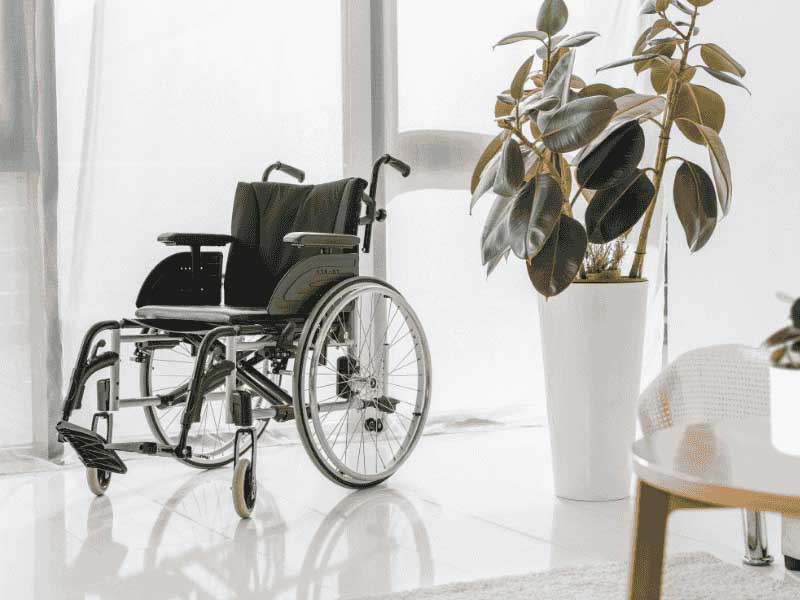
At Alustetic, we know that comfort and independence are fundamental, especially for people with reduced mobility. That’s why we offer you K·LINE aluminum windows, designed to make your daily life easier and improve your quality of life. Motorized Windows: Comfort at Your Fingertips Opening and closing windows can be challenging for many people. With K·LINE motorized windows, forget about effort and complications. With just the push of a button or through a home automation system, you can control your sliding or casement windows from where you are. More autonomy and comfort for you! Sliding motorized windows: Ideal for spacious areas, these windows open and close smoothly, without the need to exert force. Casement motorized windows: Perfect for ventilating any room, these windows are operated easily from a distance, avoiding awkward movements. Embedded rail: Say goodbye to obstacles Wheelchairs and other mobility devices can encounter barriers in ground level changes. With K·LINE’s embedded rail, this problem disappears. The ground remains free of obstacles, allowing smooth and safe transit. EMBEDDED RAIL BENEFITS Total accessibility: Move around your entire home without problems. Safety: Avoid stumbling and falls. Integrated design: Enjoy a modern space with no visual barriers. Why choose K·LINE aluminum windows? Quality and efficiency: Thermal and acoustic insulation for a comfortable and sustainable home. Innovative design: Elegant and functional aesthetics that adapts to any style. Guaranteed accessibility: Solutions designed to make life easier for people with reduced mobility. Easy maintenance: Simple cleaning and long-term durability. Why ALUSTETIC? At Alustetic, we offer personalized advice to help you choose the K·LINE windows that best suit your needs. Our team will guide you through every step of the process, from selection to installation, so you can enjoy an accessible and comfortable home.

Et truquem nosaltres per resoldre els teus dubtes

Omple el següent formulari per poder-te contactar.

Te llamamos nostoros para resolver tus dudas

Rellena el siguiente formulario para poderte contactar.